Skip to main navigation

Catalogue Blog

Nonprofit Summer Camps in 2026

Nonprofit Summer Camps in 2026

Looking to enroll in summer camps this year? Here are ten nonprofit summer camps to explore!

Arcadia Farm Camp 2026

Every camp session is all about farm, food, and fun! Children learn everything about daily farm life, from morning chores like watering, harvesting, and collecting eggs to planting seeds and tilling garden beds. They will explore the delicious world of sustainable food through activities like taste tests, menu designs, chef demos, and hands-on preparation of simple dishes and snacks. Campers spend time in the Groundhog Garden and Natural Play Space, as well as active, educational games led by experienced staff.

Ages: 6-12

Dates: June 22-June 26, June 29-July 3, July 6-July 10, July 13-July 17, July 20-July 24

Location: Arcadia Center for Sustainable Food & Agriculture (Alexandria, VA)

Cost: $375 (scholarships available)

Traveling Players Acting Camps & Theatre Conservatories

Traveling Players creates theatre, friendship, and memories with young theatre artists. Their summer programs are intentionally small – with only 13 actors per cast – ensuring every student receives personalized coaching. The carefully crafted, age-appropriate curriculum challenges students to grow as artists and individuals, building their confidence along the way. The National Endowment for the Arts selected Traveling Players as one of the nation’s “Summer Schools in the Arts,” recommending that other summer programs follow their curricula.

Their day camps in Tysons, VA are for grades 1-5, from June 22-June 26 and July 6-10, starting at $470.

Their sleepaway camps in Saluda, VA are for grades 3-8, and their residential conservatories in Saluda, VA are for grades 8-12. Visit their website for more camp details, including dates and costs.

Need-based scholarships are available.

AYPO Summer String Academy

This is a great opportunity to develop or introduce musical skills like music theory, composition, ensemble playing, and more – all while having some fun! Students will have the opportunity to learn and play side-by-side with experienced student mentors from AYPO. Daily activities include orchestra and sectionals in addition to music electives such as chamber music, music theory, fiddle, viola, or other secondary instrument classes. Camp includes three levels of orchestra to accommodate beginning through advanced string musicians. Students also participate in fun activities like tye-dye, ga-ga ball, and water balloon games!

Dates: July 20-July 24

Location: Fairfax, VA

Cost: $500

Summer Camp GOTR

The ultimate summer experience for girls, combining the empowering mission of Girls on the Run with nonstop fun and adventure. In a supportive, inclusive setting, girls build self-confidence, embrace body positivity, and strengthen friendships through engaging lessons, creativity, and physical activity. From arts & crafts and storytelling to field games, rock climbing, and splashing through their indoor waterpark, every day is a new opportunity to grow, connect, and shine.

Ages: 8-13

Dates: June 22-June 26, June 29-July 3, July 13-July 17, July 20-July 24

Location: The St. James (Springfield, VA)

Cost: $659

Barker’s Summer Program

This week-long, in-person experience is designed for adopted youth entering 5-8th grade. This supportive and engaging program gives children the opportunity to connect with other adoptees while participating in a mix of outdoor and indoor activities, arts and crafts, and guided, age-appropriate conversations. Through fun, community-building experiences and thoughtful adoption-focused exercises, participants will continue developing social skills, confidence, and a healthy sense of identity in a safe and affirming environment.

Ages: Grades 5-8

Dates: August 17-August 21

Location: The Barker Adoption Foundation (Bethesda, MD)

Cost: $475

Summer Camp at Beacon House

This dynamic 5-week summer camp experience prioritizes children living in Edgewood Commons and is designed to offer a safe, engaging, and affordable summer option that keeps kids learning, growing, and having fun. Camp L.E.A.P. is an extension of their school-year academic programs to help prevent summer learning loss through fun, project-based activities in literacy, math, science, and the arts. Campers also enjoy weekly themes, field trips, and hands-on enrichment that spark creativity and build key life skills. Sports Camp keeps youth active and motivated with daily training, fitness, and team sports like basketball, football, and more. The camp promotes physical health, teamwork, discipline, and leadership – both on and off the field.

Ages: 5-13

Location: Edgewood Commons

Urban Adventure Squad Summer Camps

Every day of outdoor learning programs with Urban Adventure Squad will include hiking, playing, exploring, and creating. All programs include a balance of unstructured play time and educator-led, hands-on activities. Squad members – who come from over 80 schools in the Washington area – explore the natural world, build confidence in themselves, make new friends, discover new passions, become environmental advocates, and connect with their communities.

Ages: Grades 2-8

Dates and Locations: June 22-June 26 at Kenilworth Aquatic Gardens, July 20-July 24 in NW DC, August 10-August 14 at the National Arboretum, August 17-August 21 in NW DC

Cost: $440 (scholarships available)

Matthew Harris Ornstein Washington Summer Debate Institute

Find your intellectual community and make new friends who share your interests this summer! Whether students are on their feet developing arguments and finding their voice or listening to the voices that research and make policy around the issues we debate about, the summer institute is great fun. Washington Urban Debate League also hosts a College Fair to help students begin their search and make connections to scholarship opportunities from debate. Students will walk away from camp ready to compete, having learned more about themselves and the world around them, and with some great swag!

Ages: Rising 6th-12th Graders (must attend public schools in their service area)

Dates: Either July 13-July 31 or July 20-August 7

Location: NE DC

Cost: Free

YWCA NCA Empower STEAM

This is a hands-on, creative learning experience for STEAM Explorers who are curious about science, technology, engineering, arts, and math. Youth learn through fun, project-based challenges while building confidence, teamwork, and problem-solving skills. STEAM Ambassadors serve as junior counselors, gaining leadership experience as they mentor younger participants and grow as role models. Together, youth learn, lead, and shine.

Ages: 8-13

Dates: June 29-July 31

Fill out their interest form to be sent the registration link with more information.

Docs In Progress Summer Filmmaking Workshops

Students create personal short films exploring who they are and how they connect to the world around them, and/or work in small teams to plan, shoot, and edit short documentary videos. The workshops guide them through the filmmaking process, from scriptwriting and concept development to post-production.

Ages: Grades 4-8 and ages 13-17

Dates: July 13-July 18, July 20-July 24, July27-July 31, August 3-August 7

Location: Silver Spring, MD

Cost: Starting from $455.35

Effective Strategies for Charitable Giving in 2026

Effective Strategies for Charitable Giving in 2026

In late 2025, in partnership with DAFgiving360, we hosted Mary Jovanovich, Senior Manager of Charitable Consulting, to share several strategies for tax-smart charitable giving in light of the new tax legislation beginning in 2026.

How might new legislation influence my giving?

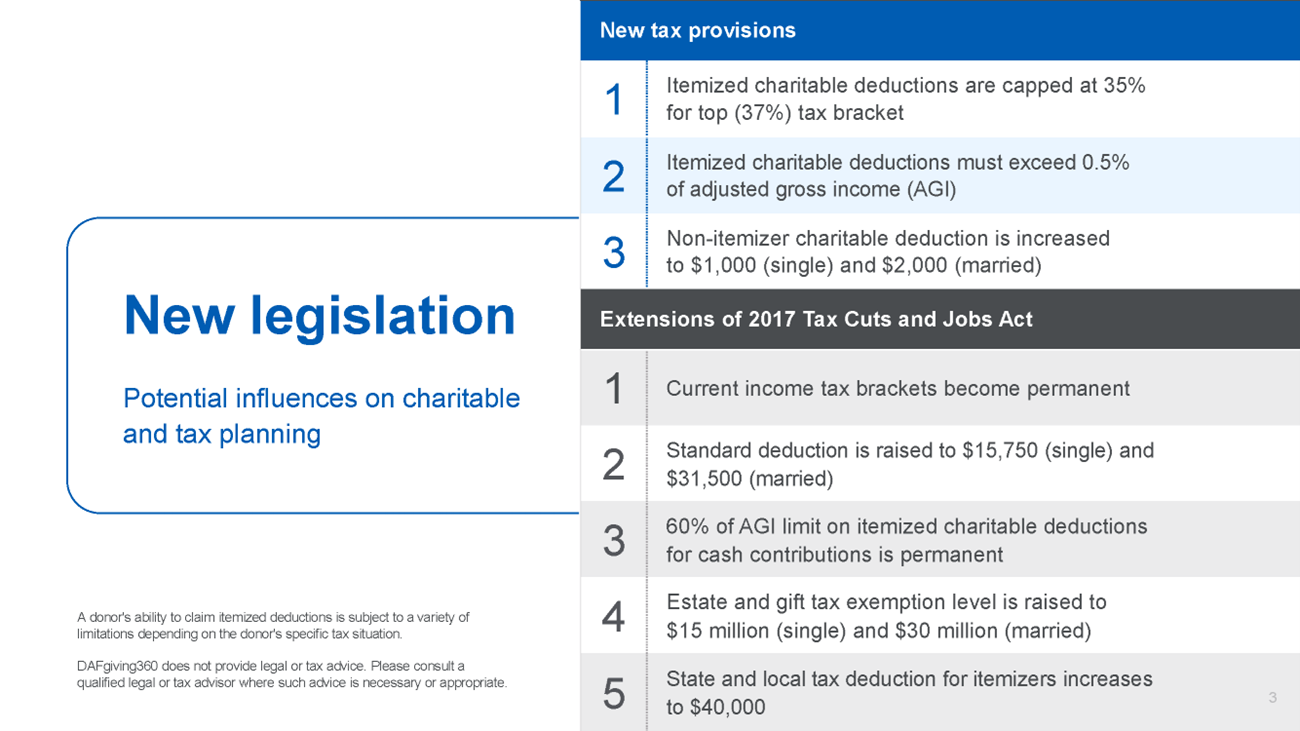
Changes to the tax law, including an extension of the 2017 Tax Cuts and Jobs Act, as well as new legislation, may influence your charitable giving in tax year 2026. Notably, if you do not itemize your taxes, that charitable deduction has increased to $1,000 for individuals and $2,000 for married taxpayers, excluding donations made to private foundations or donor-advised funds.

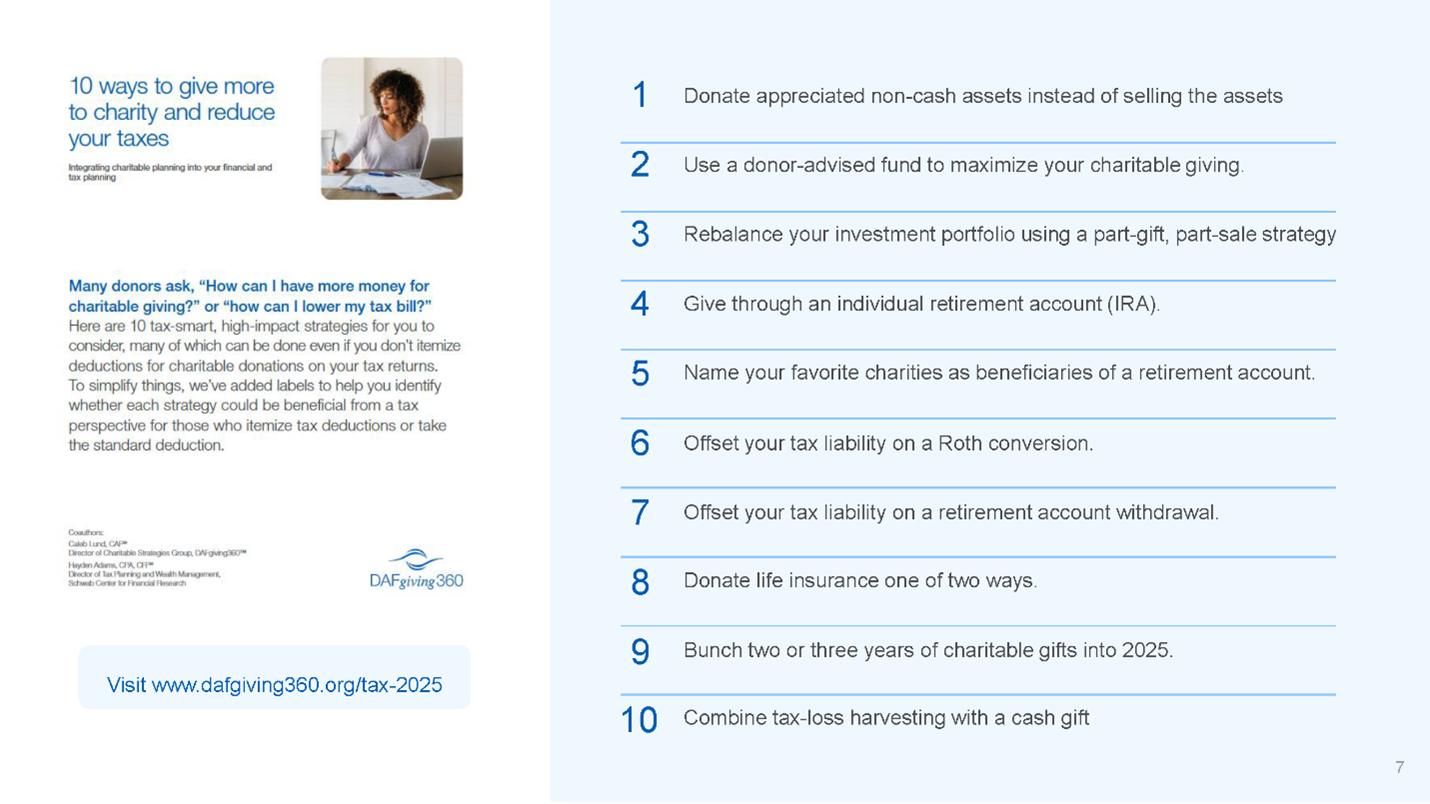
Schwab Slide 1

There are also new tax provisions for those who itemize your tax returns. Itemized charitable deductions must now exceed 0.5% of your adjusted gross income. For example, if you gave $5,000 in 2025, you could write $5,000 on your tax return when you itemize. However, effective January 1st, 2026, instead of deducting the full $5,000, you must use a formula based on your adjusted gross income when you itemize.

If you are in the top tax bracket and your adjusted gross income exceeds $700,000 annually, in the 2026 tax year, your itemized charitable deductions are now capped at 35%. You are subject to the same 0.5% disallowance or exclusion. Despite these changes at the federal level, the extension of the 2017 Tax Cuts and Jobs Act increases state and local deductions for those who itemize their charitable giving to $40,000, up from $10,000 previously.

How else might I donate?

You can combine multiple years of charitable contributions into a single tax year. This means giving the same amount you plan to give, but timing the donations differently. For example, if you make a $10,000 charitable gift annually, you could instead double the gift to $20,000 in one tax year and itemize your deductions, and then give $0 the following tax year and take the standard deduction.

You can also give highly appreciated stock, which reduces any oversized position in your investment portfolio while minimizing your taxes. Instead of selling stock, which is subject to capital gains tax, and donating the after-tax net proceeds, you can contribute the stock directly. This grants an additional amount to the causes you care about and saves on your taxes.

There are a number of ways to maximize your giving to nonprofits and also reduce your taxes. See below or visit DAFgiving360 for additional ideas.

Schwab Slide 2

How can I give to local causes?

Use Spur Local to browse 500+ trusted, critical nonprofits in the Greater Washington area. Every nonprofit undergoes a rigorous, human-centered review process that assesses leadership, impact, financial health, and community trust. Only organizations that meet these standards are included and considered partner nonprofits. Nonprofits do not pay to apply or be included as partners but are selected solely on the merits of their local impact by 150+ local volunteers who conduct our community-led review.

You can make one-time and recurring gifts online through Spur Local, by check, or by electronic transfer. We also accept gifts of appreciated stock through our brokerage with Charles Schwab and from donor-advised funds. More information is available here.

Spur Local is not affiliated with DAFgiving360. Spur Local makes no representations about the content of their programs and/or their effectiveness.

Spur Local does not give tax advice; we always recommend consulting a tax professional for any questions you may have.

GivingTuesday 2025

GivingTuesday 2025

This GivingTuesday, many nonprofits are facing uncertainty, especially here in the Greater Washington region. Federal changes are significantly impacting the DMV region, with findings from Brookings’ DMV Monitor showing that our unemployment rate is increasing at a faster pace and that more households are showing signs of financial distress.

Local nonprofits are our social safety net and a sign of regional resilience. Many have lost funding, even as demand for their services increases. This year, two in three of the nonprofit Executive Directors surveyed by Spur Local are experiencing burnout.

Every day in the DMV, thousands of nonprofit workers provide free and low-cost art classes, after-school programs, and legal services. They steward native ecosystems around the region, combat social isolation among our seniors, and feed neighbors. Today, we hear from four of the 200+ community-based organizations participating in Give Local Together, our region’s official GivingTuesday campaign, about how they are working with and for local communities and what your support this giving season means to them.

Local Nonprofits

Anjela Barnes is the Executive Director of the Accokeek Foundation, a nonprofit that stewards Piscataway Park to protect its cultural and natural resources and inspire ecological stewardship. She says, “Each year, thousands of students learn directly from the land, forming connections with the river, walking forest and meadow trails, and engaging in experiences shaped by Indigenous knowledge and community wisdom.” They have restored sensitive ecosystems, removed invasive species, and reduced erosion to protect the Potomac River and the cultural landscapes that hold generations of memory.

Lori Pitts is the Artistic Director of Ally Theatre Company, which harnesses the power of theatre and lived experience to drive meaningful criminal justice reform. She says, “We’re at the intersection of theater and advocacy, and we work alongside people who are currently and formerly incarcerated to shift narratives, imagine alternatives, build community power, and influence change.”

Hiram Cortez is the Executive Director of Many Languages One Voice, a nonprofit that fosters leadership and provides tools for greater civic participation of immigrants in DC who do not speak English as their primary language in solutions that impact their lives. They have grown their programs for youth, helping more young people define and move towards their life, school, and career goals. They also train community members on digital literacy skills and launched a new program this year to help immigrants leverage the education and work experience they have here in the United States.

Keesha Ceran is the Deputy Director of Teaching for Change, which provides teachers and parents with the tools to create schools where students learn to read, write, and change the world. “We do place-based work for the DC metro area with educators, particularly around anti-racist education and social justice practices in the classroom,” she says.

What They’re Experiencing This Year

“This year is underscored by the growing need for authentic cultural learning, meaningful outdoor engagement, and spaces where young people can step into stewardship and leadership,” Anjela elaborates.

“In DC, in particular, we saw these tough-on-crime responses resurge and expand. We saw how, when people feel fear, they want control, and the default is always incarceration, punishment, and putting people away. We have found that the people we serve need our work even more this year, and we need more spaces for healing, connection, and to have voices heard,” says Lori.

“What we’re witnessing here in the DC metro area, in particular, has definitely reminded us of how important community engagement really is and how we center the voices of educators who, right now, are feeling criminalized in many places across the country,” Keesha notes.

“Funding is much more difficult to obtain, both on the government side and the foundation side,” Hiram explains. “For our youth, every year that passes is going to be extremely important for them. What a young person does in 10th, 11th, 12th grade, whether they’re on track, is going to have a big impact on their life trajectory. So we can’t afford to not be there for them and not provide the programs that we do… The support from individuals in our community has become even more important for us to continue the work.”

What Brings Them Hope

One of Ally Theatre Company’s community advocates and board members, Antoine Coleman, emphasizes the power of the arts. “I went to prison at a young age. I served over 20 years in prison. I was originally sentenced to life and was released under the Incarceration Reduction Act in DC. My first job was as a resident artist for poetry,” he shared. “I was able to host my own poetry shows and invited formerly incarcerated members of our community. For a lot of people, that’s the only way they can get their story out and change perceptions… To be able to provide those platforms for our youth and community is very important.”

“Despite what we are witnessing right now, it’s been hopeful – recognizing that we do take care of us, and continuing to center that in the work we do, not just for today but what the future will bring as well,” Keesha emphasizes. “For all of us, whether we are in the classroom, whether we have young kids in the classroom or not, our responsibility as community members is to support education as a public good.”

“We really think about the next seven generations because the decisions that we make today, that impact the land, the environment, our education, really change the future,” Anjela shares. “We’ve done the hard work and laid the foundation for transforming our communities through our work… People reach out, and they say, How can I help?” Hiram echoes this sentiment. “We have seen that the broader DC community cares a lot about immigrant families… That makes me feel really hopeful. Our work will continue in one way or another.”

As Antoine encapsulates, “so as long as our power is in what we can create, you always have to be optimistic.”

This GivingTuesday, direct your resources locally by visiting GiveLocalTogether.org, exploring the work of these nonprofits and over 200 community-based organizations, and giving to the causes you care about.

List of Food Access Resources

List of Food Access Resources

Looking to access and/or support local food nonprofits? Learn more about these 8 organizations, what they offer community members, and how to connect with them.

Compiled by Adelaide Easter, Spur Local’s Summer 2025 Nonprofit Management Programs Intern

Meals on Wheels of Takoma Park/Silver Spring

  • Contact: (301) 434-1922, meals@mowtakoma.org
  • Located: 7410 New Hampshire Ave, Takoma Park, MD 20912
  • Offers: Home delivery of two fresh, heart-healthy meals per weekday
  • Available: Mon-Fri for homebound residents within service area. Meals delivered between noon and 2pm

Western Fairfax Christian Ministries

  • Contact: (703) 988-9656, clientservices@wfcmva.org
  • Located: Free Food Markets in Chantilly (4511 Daly Dr Suite J) and Centreville (5948 Centreville Crest Ln)
  • Offers: Food by appointment every 30 days with fresh produce, shelf-stable goods, and toiletries. Emergency food available without appointment. Also offer financial assistance for rent/utilities for qualified households and other wrap-around services. Serve residents of 9 zip codes in western Fairfax County
  • Available: Chantilly: Mon/Tue/Thu from 10:30am-6:30pm and Wed/Fri from 10:30am-2pm, Centreville: Tues/Wed from 10:30am-6:30pm and Thurs from 10:30am-2pm

The Father McKenna Center

  • Contact: (202) 842-1112, info@fathermckennacenter.org
  • Located: 900 North Capitol St NW, Washington, DC 20002
  • Offers: Fresh produce and groceries in a market format on Mondays-Thursdays (first visit, you need a photo ID and proof of DC residence)
  • Available: Mon-Thu from 1:30-2:30pm, and visits every 3 weeks, for low-income DC residents with senior households as priority. DC residents only: DC photo ID and proof of residency are required
  • Additional Services: Breakfast 7:30-8:30am; Lunch from 12-12:30pm, case management, computers available from 8:30-11am, laundry available for the first 8 people, showers for the first 15 people, mail services, phone from 8:30-11am, clothing first and third Thursdays of the month

Nourishing Bethesda

  • Contact: (301) 664-4630, food@nourishingbethesda.org
  • Located: 5020 Battery Lane, Bethesda, MD 20814
  • Offers: Bi-weekly appointment-based food distribution market with fresh produce, protein, and shelf-stable goods
  • Available: By appointment Thu between 6-7:45pm, Fri between 10am-5:30pm, for residents of certain Bethesda zip codes

Kitchen of Purpose

  • Contact: (703) 596-1557, info@kitchenofpurpose.org
  • Located: 918 S Lincoln St #2, Arlington, VA 22204
  • Offers: Culinary job training, after-school meals, “meals with dignity” for vulnerable residents
  • Available: Training on Mon-Fri, and food assistance, for immigrants, children, and low-income residents

Community FarmShare

  • Contact: (301) 377-4267, info@communityfarmshare.org
  • Located: Montgomery County, MD
  • Offers: Mobile farm markets with local fresh produce, as well as internships
  • Available: Mobile market schedule varies at each location, open to the public

FRESHFARM

  • Contact: (202) 391-7353, hello@freshfarm.org
  • Located: 1380 Monroe Street NW, #605, Washington, DC 20010 (mailing address)
  • Offers: 26 DMV farmers markets and farm stands: visit freshfarm.org/markets for full schedule
  • Available: Produce Plus Program | SNAP/EBT and WIC are accepted and doubled, while funding allows

Shepherd’s Table

  • Contact: (301) 585-6463, info@shepherdstable.org
  • Located: 8106 Georgia Ave, Silver Spring, MD 20910
  • Offers: Daily Meals, Resource Center, Eye Clinic, Clothing Closet and Culinary Skills Training Program
  • Available: Breakfast on Mon-Fri from 7:30-8:25am, lunch on Mon-Fri from 11:45am-1pm, dinner every day from 5:30-6:55pm, and brunch on weekends from 10-10:55am, open to all

Find more nonprofits in your area by searching SpurLocal.org!

Building the CASE for Community: 2025-2030 Strategic Plan

Building the CASE for Community: 2025-2030 Strategic Plan

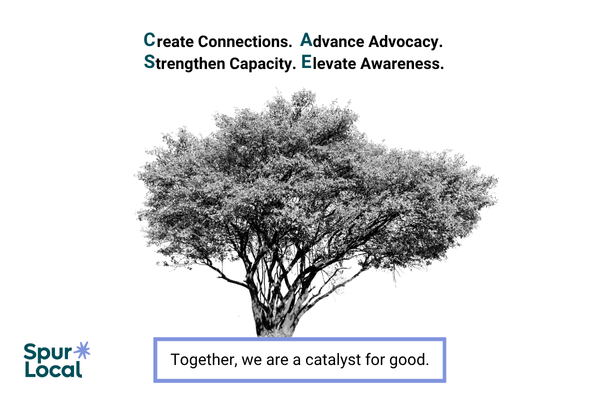
Spur Local is excited to share our new five-year strategic plan. While the plan is new, it builds on the 20+ year history of our work to uplift, connect, celebrate, and support the Greater DC region. We are renewing our commitment to building the CASE for community.

2025 Strat Plan CASE Graphic

The serviceberry tree above is a good representation of this work. From a tiny seed, it blossoms into a full tree that represents hope, perseverance, and renewal. It is one of the first local plants to blossom in the spring, indicating we have made it through winter. Its bloom is a small action that signals others to follow.

This work isn’t theoretical; we’re already doing it. Since 2003, our organization has raised over $70 million for local nonprofits, trained more than 30,000 nonprofit professionals, connected thousands of residents with causes they care about, and highlighted the stories of those working in our region who are often overlooked.

At Spur Local, we believe that community has the power to spark big change. As our work blossoms, we hope others will join us in this renewal and growth. Over the next five years, we will:

  • Create more lasting relationships between nonprofits, community members, and each other,
  • Drive more resources and awareness to local nonprofits,
  • Streamline how nonprofits can find the relevant and timely resources they need, and
  • Increase support for local nonprofits through storytelling and community engagement.

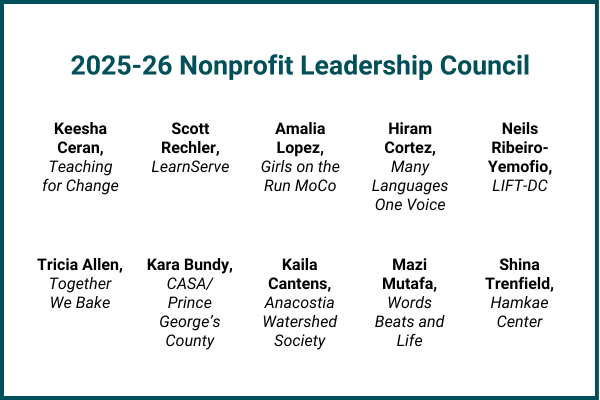
As one of our first steps toward centering nonprofits’ voices in all that we do, we are launching the Nonprofit Leadership Council, ensuring that Spur Local centers nonprofit partners in our advocacy and programming. We are thrilled to work with the ten local leaders on our inaugural council and appreciate the accountability and guidance they will provide our team.

2025 Strat Plan NLC Graphic

By connecting community members through volunteering, learning about the region, and engaging deeply, we will strengthen civic engagement and foster a commitment to being in relationship with one another. In coalition, Spur Local will advocate for and with local nonprofits and communities. And because we invest in the people who power this region, we will serve leaders and nonprofit workers through individual and group wellness programs, leadership development, cohorts, and customized professional development so they can advance their organizations, ultimately advancing the region.

The Greater Washington region is unique, strong, vibrant, curious, and committed. Stories matter, and Spur Local will tell ours with a purpose. This plan isn’t just a direction for what we do, but a call to action for you too: a call to all those who care about this community to take small actions and plant seeds now, so that our region blossoms into the community we need and hope for tomorrow.

Our power is community. Our power is local. And, our power is growing. We invite you to join us by staying in touch and supporting our work.


Traveling Players Alumnus Performs in Hamilton National Tour

Traveling Players Alumnus Performs in Hamilton National Tour

Written and originally published by Traveling Players Ensemble

Traveling Players alumnus, Kai Thomani Tshikosi, is taking to the stage on the National Tour of Hamilton, bringing Hercules Mulligan and James Madison to life. His journey from our stage to the spotlight is a testament to the training, passion, and dedication he started honing at Traveling Players. We couldn’t be more proud of Kai!

Tshikosi (right) backstage during ‘Hamilton’

Tshikosi was a student performer at Traveling Players Ensemble from 2006 – 2012, where he went on his first-ever performance tours as an actor. He spent three years as a member of the Shakespeare Troupe, an advanced audition-based summer conservatory where high school students take a full-length Shakespearean play on a pre-professional tour to theatres all over the region. As a member of Shakespeare Troupe, he played Macbeth (Macbeth), Leontes (The Winter’s Tale), and Biron (Love’s Labor’s Lost), and performed at more than a dozen theatres, including the Kimball Theatre in Williamsburg and Lime Kiln Amphitheatre. He concluded his education at Traveling Players with a performance of Othello, in which he played the title role.

Said Tshikosi about his time at Traveling Players, “Traveling Players is probably more singularly responsible for my artistic and social development than any other space I was able to grow in as a child. It incubated and deepened my love of text and poetry, taught me the meaning of ensemble, instilled in me the values of rigor and teamwork. It introduced me to friends who more than a decade on are still several of the closest people to my heart. Most importantly, it was the place I felt most safe, most able to be myself and to grow into who I was becoming.”

Tshikosi (right) in Traveling Players’ 2009 production of ‘Macbeth’

Tshikosi continued his education at Emerson College in Boston, MA. He graduated in 2015 with a BA in Acting and a concentration in Global/Post-colonial studies. He then furthered his education as a graduate student at Brown University, where he earned his MFA in Acting in 2023. At Brown, Tshikosi performed in various plays and worked as a director, educator, and fight and intimacy choreographer.

Tshikosi has been a working actor in various productions along the Northeast coast. Some recent credits include: Pirelli (Sweeney Todd) at Trinity Repertory Company, Tybalt (Romeo & Juliet) at Commonwealth Shakespeare Company, and Oberon (Midsummer Night’s Dream) at Shakespeare & Company.

Currently, Tshikosi is working on the Hamilton National Tour in the Angelica cast. He will be performing as Hercules Mulligan/James Madison for the duration of the tour, which will be in Charlotte, NC from January 7 – February 2.

Other Hamilton tour locations include: Greenville, SC; Memphis, TN; Houston, TX; Austin, TX; New Orleans, LA; Chattanooga, TN; Omaha, NE; East Lansing, MI; Des Moines, IA; Cleveland, OH; Columbus, OH; Grand Rapids, MI; Ottawa, ON.

You can find more information about his credits and contact Tshikosi on his website.

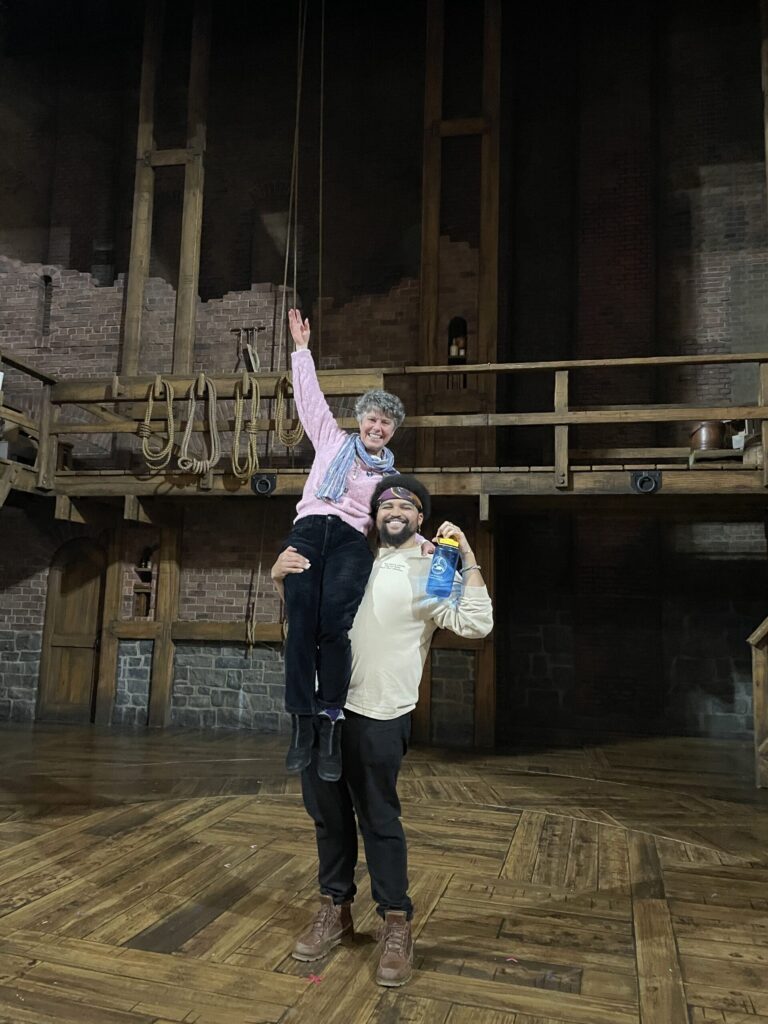
Tshikosi with Traveling Players' Founder, Jeanne E. Harrison, on the set of 'Hamilton'

Tshikosi with Traveling Players’ Founder, Jeanne E. Harrison, on the set of ‘Hamilton’

Recognized by the National Endowment for the Arts as one of 25 model “Summer Schools for the Arts,” Traveling Players is dedicated to training students in grades 2-12 in theatre. Now in its 23rd year, the company has grown from a summer camp of 18 students to a year-round theatrical community engaging 1000 students annually. Founded on belief in the imagination, wit, and honesty of teenagers, Traveling Players’ programs help students find their voice through bold ensemble-based acting classes and theatre productions that emphasize connection and community.

Students interested in training with the company can take classes year-round at the Traveling Players Studio in Tysons Corner Center, including their day camp for grades 2-5. Over the summer, they also offer sleepaway camps & residential acting conservatories based in VA’s Northern Neck, right on the Rappahannock River.

In 2020-21, Traveling Players received the ArtsFairfax Arts Education Award.

Spaces to Grow

Spaces to Grow

This summer, Spur Local’s Communications and Civic Engagement Intern Kyle Reid created a short documentary highlighting two local arts & culture nonprofits, 826DC and Young Playwrights’ Theater.

826DC helps DC students strengthen their writing skills, share what matters to them, and build a lifelong relationship with writing.

Young Playwrights’ Theater inspires young people to realize the power of their own voices. YPT provides inspiration, tools, and opportunities for young and emerging artists to develop and share their stories.

DC is a place that celebrates art. This is a city of politics, but also a city of music and museums. There is a rich history of, and respect for, creatives performing at their highest. People with this artistic passion are all over the District. There’s so much artistic talent in our youth, but many of them struggle to find places to express themselves outside of the classroom. When children have a passion for the arts and the space for artistic expression, what does that look like? What does that do for them, for their communities?

“It is always important as a community for us to wrap ourselves around supporting every young person to have an education that inspires them, that motivates them, that engages them, that tells them that they matter and that there is a life of possibility out there for them,” said Robyn Lingo, Executive Director of 826DC. “There are so many things in our world that tell young people that what they have to say doesn’t matter, or that they need to fit into this box, or follow these instructions, or do the assignment in this way. I think finding your voice, for me, is more about what we as adults do to create an environment where every young person knows that they are important, that people want to hear what they have to say.”

“There are sometimes limited opportunities for young people to engage with the arts. When we look at a lot of school curricula, a lot of what students learn is focused on testing, and art seems almost like an afterthought. But there are a lot of students who are able to express themselves in ways, through writing, through performance, that they ordinarily don’t feel equipped to do in a normal school day,” said Farah Lawal Harris, Artistic Director of Young Playwrights’ Theater. “This type of work gives young people confidence in themselves. It exposes them to skill sets that they didn’t even know about, and it helps them just imagine a greater world for themselves and even what career options they could explore.”

Credits

Created by Kyle Reid and Amanda Liaw, Spur Local

Featuring (In Order of Appearance):

  • Robyn Lingo, Executive Director, 826DC
  • Tyonna J., Poet
  • Wisdom N., Poet
  • Farah Lawal Harris, Artistic Director, Young Playwrights’ Theater
  • Amira Al Amin, Playwright of “Dresses that Twirl”

Additional 826DC Footage Courtesy of: Sarah Richman, Associate Director of Communications and Development, 826DC

Additional YPT Footage Courtesy of: Cody Bahn, Communications Manager, YPT

Archival Photos Courtesy of: DC Public Library

Music Courtesy of: Artlist

  • Ballerino by Yehezkel Raz
  • Midnight Sun by Beneath The Mountain
  • Ballerina by Yehezkel Raz
  • Icicles by Yehezkel Raz
  • The Kid and the Bird by SEA

Local Executive Directors on Resilience and Sustaining the Nonprofit Workforce

For five years, Spur Local has been surveying hundreds of Executive Directors at small, local nonprofits across the Greater Washington region to gain insight into their personal and organizational wellbeing. Each annual survey gives a snapshot of how community leaders experience and respond to challenging moments, from COVID-19 to major funding losses. And every survey consistently shows that these leaders, and their teams, are disproportionately vulnerable to burnout.

Our Executive Director, Matt Gayer, has written about the need to invest in our people, and how nonprofits and our sector can better support nonprofit teams to address the higher-than-average voluntary turnover rate. Since 2023, at least 1 in 2 Executive Directors expressed that they recently, were about to, or currently experienced a sense of burnout at the time of completing the survey. Beyond this figure, the qualitative responses we received were demonstrative:

  • “I currently feel a sense of burnout and work diligently to hide it. Any sense of wellbeing and self-care is erased by the daily demands.”
  • “There is always a crisis or urgent need no matter how hard we try to stabilize operations.”
  • “I mostly choose to prioritize my staff’s wellbeing over my own.”

Over the years, it is clear that many Executive Directors continue to face the same issues of burnout, low staff retention rates, and inadequate support. Persistently, the top three barriers to these leaders accessing the care they need are a lack of time, staff capacity, and financial resources. We must acknowledge that these issues are not new. They are systemic, incur long-lasting consequences, and require all of us in the charitable sector to address.

Using general operating support to foster healthy workplace environments

Nonprofits are often expected to give their all without prioritizing their own wellbeing, providing more services with fewer resources and support.

“I think the model leads to burnout all by itself,” said Taylor Mitchell, Executive Director of The Platform of Hope. “One person is your HR person, they are development, lead staff, do budget. No one is all those things… It’s impossible for one person to do it all without getting burned out.”

When asked what type of support would most benefit their organizations, leaders highlight general operating support as key. This kind of funding is what pays for rent and salaries, and can allow them to provide their staff with mental health resources, technical training, HR training, professional development courses, and more. Knowing they can cover the basics alleviates external stressors and creates space for them to implement sustainable staffing practices that increase retention. “Overhead” is not inefficiency, but sustainable investment in the people who drive nonprofit work, allowing for organizations to foster healthy workplace environments in the long-term.

“My organization right now is not able to provide retirement benefits,” Taylor emphasized. “So, to me, it’s not just burnout but not being able to stay long-term because of this. can grow a lot and grow skills but, at the same time, I cannot expect staff to be retained when this is not sustainable long-term.”

Sustaining the work long-term through multi-year funding

Supporting staff wellbeing is especially significant for frontline nonprofit workers. “Burnout is a real issue, not just for leaders but staff,” stated Paula Fitzgerald, Executive Director of Ayuda, a nonprofit that serves over 3,000 low-income immigrants annually. “The work we do is tough. A lot of the people we work with… have experienced crime and trauma. There is a lot of need in that area but that is also a lot for staff to hold.” Increasingly, this includes the emotional duress of being targeted for working in fields like immigrant services.

“A lot of organizations have had to retract or reduce or close down completely, so you lose a lot of the infrastructure,” Paula explained. “In terms of building the future of nonprofit work, it is definitely deterring people from entering the field.”

As nonprofits keep operating in an environment where funding is decreasing immensely, the stability that multi-year grants provide becomes more apparent. In the immediate term, receiving multi-year funding eases the pressure on nonprofit leaders to raise an entire budget from scratch year after year so they can focus on strengthening their operations and deepening their impact.

“Long-term, I see [the nonprofit sector's] resilience being challenged not just financially, but with staff retention as well,” noted Tamela Aldridge, Executive Director of Only Make Believe. “Someone has got to step up. We cannot just look at nonprofits and tell them to do better. We are trying to do the best we can and we keep getting rugs pulled out from underneath us… We are human beings.”

Though the long-term effects of burnout on the sector can be incredibly damaging, a shift in thinking around how we invest in what we value can be just as restorative.

“Multi-year grants are investments in the mission, investments in the community, and investments in the organization. It isn’t about one feel-good moment, but about restructuring what it is we value and how we show up for humanity,” Tamela shared.

Trusting nonprofit leaders and workers

As a charitable sector, we must trust nonprofits to do the work and implement the organizational practices they need to sustain it. As Taylor highlighted, we cannot always see the immediate impact or progress of our work. “You have to keep going, even if you are not seeing it immediately.” Providing general operating support and multi-year funding is a tangible way to enable nonprofit leaders to improve their personal and organizational wellbeing, better retain their staff, sustain services for the communities they serve, and increase the long-term health and resilience of the nonprofit workforce.

This article was written by Leslie Aguilera, spring 2025 Communications and Civic Engagement Intern at Spur Local, in conversation with Taylor Mitchell at Platform of Hope, Paula Fitzgerald at Ayuda, and Tamela Aldridge at Only Make Believe. It was edited by Amanda Liaw, Spur Local’s Communications and Marketing Director.

A Simple Conversation Can Lead to Something Meaningful

A Simple Conversation Can Lead to Something Meaningful
Here’s how Spur Local inspires generosity in the DMV
Originally published by GivingTuesday

Generosity is all around us and shows up in a number of ways.

It’s holding the door for the person behind you, paying for someone’s coffee, or sending a thank-you note to a peer who inspired you. It’s these, at times seemingly simple, everyday acts of kindness that are fueling positive change in America’s capital city, Washington, D.C.

That’s what we’re hearing from local GivingTuesday leader Amanda Liaw, who serves as the Communications and Marketing Director at Spur Local, an organization that spearheads campaigns throughout the year to generate support for local nonprofits. Most recently, Spur Local introduced an all-new day of giving called, Give Greater D.C., that inspired people in the DMV area to give back. The campaign was met with an incredible amount of love resulting in over $300,000 raised to support 154 local nonprofits!

We wanted to know how Amanda and the Spur Local team pulled it off, so we sat down to chat through their strategy. We hope this conversation will spark ideas for your future generosity campaigns like the one you have coming up on Tuesday, December 2. (Hint: that’s GivingTuesday 2025!)

When did you first hear about GivingTuesday and what was your initial reaction?

I first heard about GivingTuesday as a marketing and development associate at a small local nonprofit, one of Spur Local’s nonprofit partners, where I first began working in this sector. I ran its GivingTuesday fundraiser for two years as part of Spur Local’s annual Give Local Together campaign, before joining Spur Local. It was a great way to get creative with our fundraising and reach our audience in new ways. I tested storytelling themes, different visual aesthetics, and more 1:1 methods of engaging with people on social media.

What advice would you give to nonprofit teams who want to plan a GivingTuesday campaign?

GivingTuesday is an opportunity to try one new thing, not everything at once! As a capacity builder, we know that nonprofit advice around campaigns like GivingTuesday can feel overwhelming. When we speak with small nonprofit teams that often plan GivingTuesday campaigns with no budget, a big challenge we see is that there are too many potential strategies and choices.

Our advice: pick one goal, test one new tactic, and see what happens! Based on what you learn, you can continue to build and deepen your campaign in future years.

In addition to your GivingTuesday campaign, “Give Local Together,” you hosted a campaign earlier this spring called, “Give Greater DC.” How did it go?

This was the first Give Greater DC day and it was a resounding success! The campaign raised more than $300,000 for 154 local nonprofits. Many of these were small donations, averaging around $130, from over 1,000 unique donors.

Spur Local created this day to celebrate the strength of our local communities here in Greater Washington during a challenging time for the region. Nonprofits continue to serve residents and advocate for change every day, and it was inspiring to see the amount of love and support that poured back into our nonprofit workers and leaders on this day.

One of my favorite parts of the campaign was seeing donors leave comments with their gifts. One donor wrote to a nonprofit: “Thank you for fighting. Thank you for caring. Thank you for inspiring.”

Any lessons learned from Give Greater DC or Give Local Together?

Tell the everyday stories and meet people where they are.

We have found regional campaigns to be a wonderful vehicle to highlight community members–including nonprofit staff, volunteers, local leaders, and more–who are creating positive change in their workplaces and neighborhoods. People connect with these hyper-local stories that we don’t often hear about.

For one-day campaigns like Give Greater DC or GivingTuesday, we’ve also found it helpful to partner with groups that are already part of people’s daily routines. This can look like partnering with companies to encourage their employees to participate during the work day or partnering with local businesses to display flyers and reach shoppers in their stores.

How does data help your team make decisions and measure success? (Where do you get your data from?)

We send a post-campaign feedback survey to every participating nonprofit and typically get a great response rate of about 30%. After closing our campaign’s donation portal, CauseVox, we also dive into the data by asking questions like:

  • How many unique donors gave to the campaign?
  • How many nonprofits reached their fundraising goals?
  • How much did peer fundraisers raise?
  • What was the average donation amount?
  • How much was raised before, during, and after the day of the campaign?

And so on! Our team uses feedback from nonprofit partners to improve every future campaign, whether that’s working with CauseVox to develop additional customizations on the campaign site or creating more personalized nonprofit resources in-house.

We also report out trends in the donation data we see, so that nonprofits can make their future decisions based on what other organizations found challenging or successful. For example, nonprofits can use our data to tweak their future fundraising goal amount depending on the average goal amount across all participating organizations. Nonprofits can also explore the average amount raised across organizations of a similar budget size or issue area.

Do you have a favorite success story from Give Greater DC or Give Local Together?

One of my favorite stories is about a relationship that I formed with a local civic group. I initially reached out to them to partner on Give Local Together a few years ago, but we ended up spending the majority of our collaboration on creating group volunteer opportunities with several of our nonprofit partners across the year.

That experience developed a new connection between the civic group and one of our nonprofits, who they now support in a greater way because of how meaningful the volunteer experience was.

I consider this type of ongoing, long-term relationship-building as the greatest success that a campaign can have, even if (or especially if) the collaboration itself extends beyond the campaign.

What’s your go-to way to engage with volunteers and donors ahead of GivingTuesday?

Spur Local provides nonprofits participating in our Give Local Together campaign with ideas and sample toolkits for engaging their audiences ahead of GivingTuesday. The best way to get your volunteers and donors excited is through personal outreach.

Depending on who you’re engaging, this personalization can look different. For some, you can reach out to ask them to share their story of why they give to your organization. For others, you can ask them to join a crew of peer fundraisers to amplify the impact of your organization alongside others.

Ultimately, the go-to strategy depends on your goals, the capacity of your team, and knowing how to meet your volunteers and donors where they are.

We know it’s several months away, but what can we expect for GivingTuesday 2025 on Dec. 2?

Our team is already getting started planning for GivingTuesday 2025! Every year, our Give Local Together campaign usually draws more than 200 nonprofit partners to participate. This year, we will continue to build on our strengths and lessons learned by providing nonprofits with the resources they need to build successful campaign strategies. We’ll also focus on sharing their stories of change on-the-ground and connecting them with people who live in the region.

Where Growth Meets Purpose: My Time at Spur Local by Blanca Melchor

This past spring, Spur Local hosted two Communications and Civic Engagement interns from the UCDC program, including Blanca Melchor. Here, Blanca shares her internship experience.

Where Growth Meets Purpose: My Time at Spur Local
Written by Blanca Melchor

Interning at Spur Local has been one of the most transformative experiences of my professional journey so far. What makes this place so special is not just the work itself–though that’s powerful–it’s how the organization creates a space where you can grow, explore, stumble, and rise at a pace that honors your well-being.

Spur Local offers something that’s rare, especially for young people just entering the professional world: the chance to step into the realm of corporate life–managing deadlines, juggling communications, being part of campaigns and real deliverables–but without the burnout that too often comes with it. The pace here is intentional. You’re allowed to take breaks. You’re encouraged to check in with yourself. And most importantly, you’re reminded that your voice and your health matter just as much as your productivity.

And yet, that doesn’t mean the work is any less impactful. In fact, it’s the opposite. Every single day, I got to be part of work that’s truly trying to change the world–starting at the local level. The nonprofits Spur Local partners with are doing extraordinary work: helping refugee families find housing, providing arts education in underfunded schools, offering legal aid to those who can’t afford it, feeding seniors, mentoring students, and building economic power in marginalized communities. It’s easy to assume that local work only has local impact, but this experience shattered that notion for me. What I’ve learned is that local work is national work. It’s global work. These small but mighty actions spark change that ripples across cities, states, and even countries. They create pathways that others can follow. They become blueprints for equity and justice.

Working here helped me see how much is happening behind the scenes–how many people are out there, fighting every day for things we often take for granted: safety, opportunity, dignity, access. I got to witness and uplift stories that rarely make the headlines but hold deep meaning and power. These are the kinds of stories that change perspectives, that humanize policies, that move people to act.

Through all of this, I was surrounded by a team that really embodied what it means to support and uplift one another. When I struggled, they were patient. When I had an idea, they listened. When I needed guidance, they offered it. That kind of environment gave me the courage to take initiative and trust myself more. It gave me the room to lead–and the safety to learn when I didn’t have all the answers.

This internship taught me that professional development doesn’t have to come at the cost of personal care. That the best work happens when you’re seen as a whole person, not just a role. And that small teams, doing intentional work, can move mountains.

And that truly profound, movement-building work often comes from the places you least expect–not only massive organizations with endless resources, but also small, focused teams driven by purpose and heart. Spur Local has never strayed from its values. Here, the mission stays rooted in community, the work remains people-centered, and the impact is felt far beyond what their size might suggest.

Spur Local didn’t just teach me skills–it reshaped how I see myself, my community, and my responsibility to the world around me. I’ll carry that with me wherever I go next.